When you click on links to various merchants on this site and make a purchase, this can result in this site earning a commission. Affiliate programs and affiliations include, but are not limited to, the eBay Partner Network.
MASSIVE CIRCA 1860s GOTHIC CATHEDRAL PICKLE JAR
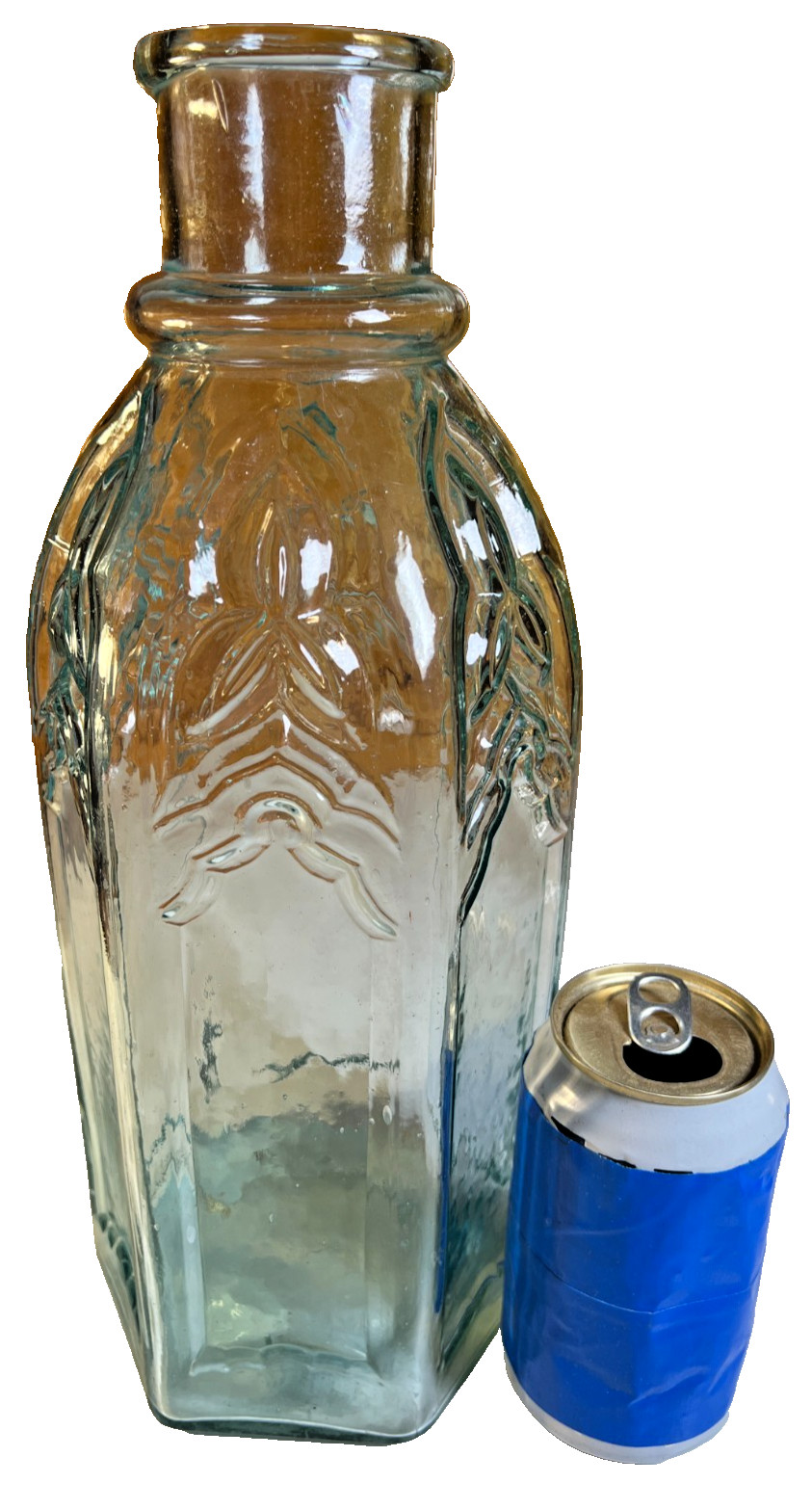
Outstanding nineteenth-century American cathedral-style pickle jar standing an impressive 13 3/8 inches tall.
This is the grand, highly decorative form collectors call a Gothic Cathedral pickle. Each side is molded with an elaborate arrangement of pointed arches, sweeping foliate devices, and architectural ornament inspired by the Gothic Revival movement. Strongly beveled corners rise into sloping shoulders, an enormous rounded collar, tall neck, and hand-finished rolled mouth.
The jar is made from attractive light aqua glass and has tremendous presence. A standard beverage can is shown for scale—the jar absolutely towers over it.
What Was It Used For?
These wide-mouthed commercial jars were primarily used for:
- Whole cucumbers and gherkins
- Mixed pickled vegetables
- Preserved fruits and tamarinds
- Other vinegar-packed specialty foods
Before modern refrigeration and vacuum-sealed packaging, pickling was one of the most dependable ways to preserve seasonal produce. The wide opening allowed whole vegetables to be packed and removed easily. The mouth would originally have accepted a large cork, often secured with wax, foil, or another protective covering.
The National Park Service identifies this same general Gothic form as a commercial pickle bottle and notes that the wide mouth accommodated larger vegetables while glass prevented the food from acquiring unwanted flavors or odors. National Park Service
Why “Cathedral”?
The pointed panels and elaborate molded foliage were inspired by Gothic churches and the broader Gothic Revival movement popular during the mid-nineteenth century.
These jars transformed an ordinary commercial food container into something dramatic enough to attract attention on a grocer’s counter. Their elaborate molds were comparatively expensive to produce. After the Civil War, manufacturers increasingly adopted plainer and cheaper square pickle bottles, making the fully ornamented cathedral forms characteristic of an earlier period.
Antique-bottle research places most of the highly decorative Gothic cathedral variants between the 1840s and 1880s, with simpler square designs becoming prevalent beginning around 1865–1870. Glass Bottle Marks reference
Impressive Countertop Size
At 13 3/8 inches tall, this is substantially larger and more visually commanding than the ordinary pickle and condiment bottles commonly encountered.
Examples of this general size would have stood on the counter or shelving of a nineteenth-century country store. An Antiques Roadshow specialist recently described comparable cathedral jars as store-counter containers from the 1860s–1870s.
Condition
Exceptionally attractive condition for a large, fragile glass food container approximately 150 years old:
- No chips
- No cracks
- No haze
- Bright, clean, and shiny glass
- Strong, deeply molded cathedral decoration
- Hand-finished rolled lip remains intact
- Numerous fine matte surface scratches and honest shelf wear across the underside
The underside wear is expected from decades of being placed on counters and shelves. It is also valuable visual evidence of genuine age and use—not a structural problem. The body remains remarkably clean and displayable.
Please examine all photographs closely, as they form an important part of the description.
A Remarkable Survivor
Large commercial food jars were frequently broken, discarded, or recycled once their contents were consumed. That makes the survival of an enormous, elaborately molded example in this bright and undamaged condition especially impressive.
This is an architectural piece of early American packaging: part bottle, part Victorian sculpture, and an exceptional centerpiece for a collection of antique glass, country-store advertising, food bottles, or Gothic Revival decorative arts.