When you click on links to various merchants on this site and make a purchase, this can result in this site earning a commission. Affiliate programs and affiliations include, but are not limited to, the eBay Partner Network.
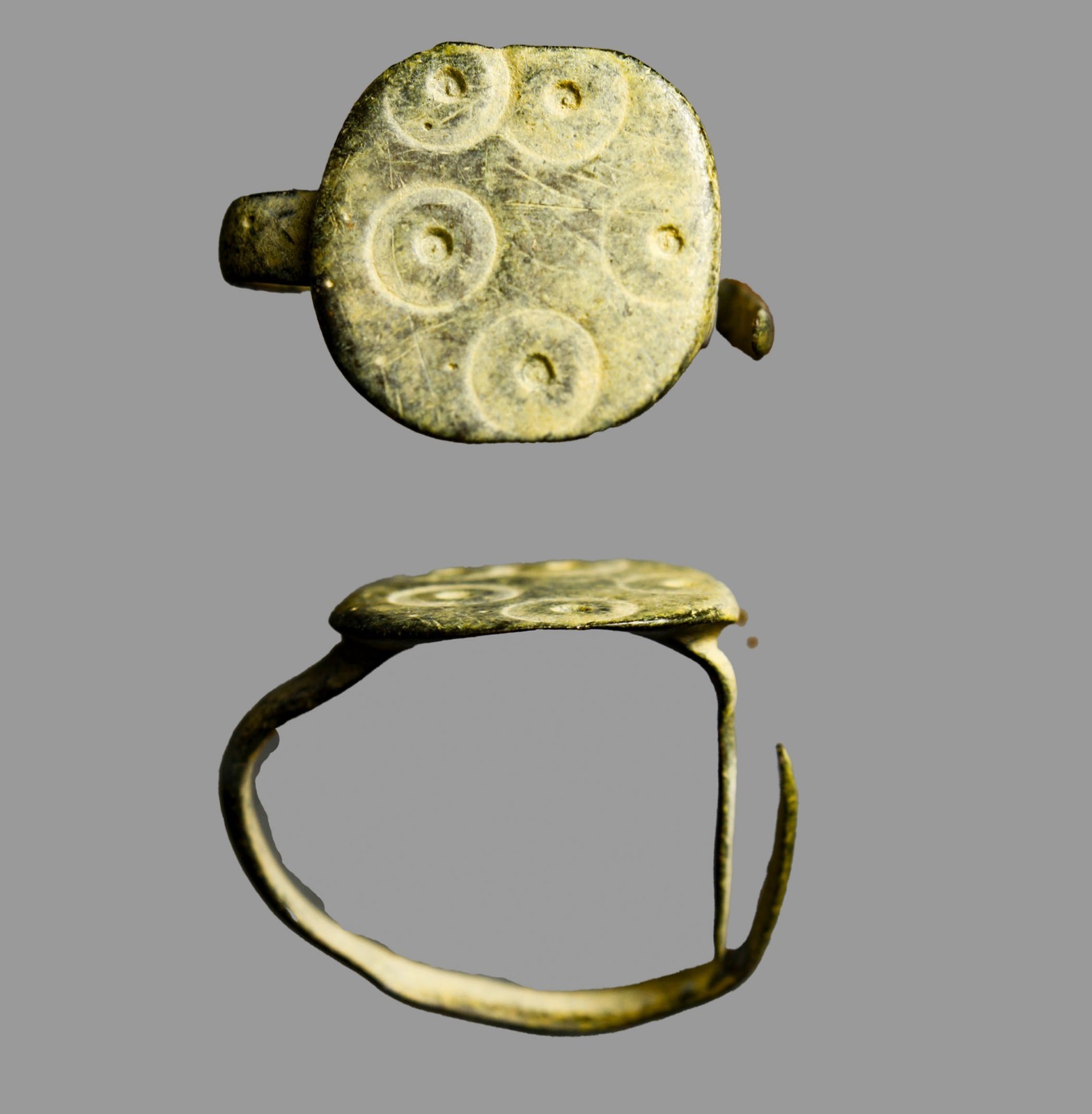
Ancient Roman / Late Antique Bronze Apotropaic "Magic Circles" Concentric Ring-and-Dot Signet Ring (Circa 2nd–4th Century AD) US Size 2–4 Authentic
Authenticity Notice
This artifact is certified authentic and will be accompanied by a Certificate of Authenticity and Provenance. All professional inventory is vetted through recognized platforms to ensure legal standing.
Details
Object: Apotropaic / Protective "Magic Circles" Ring-and-Dot Bronze Signet Ring
Culture: Imperial Roman / Late Antique Graeco-Roman
Date: Circa 100–400 AD
Material: Bronze (Copper-alloy)
Form: Large circular flattened bezel deeply ring-punched with multiple concentric "magic circle" (ring-and-dot) motifs, set on a slender wire hoop (open / broken at back)
Ring Size: US Size 2–4 (Adjustable / Open Band)
Region: Roman Levant / Eastern Mediterranean Provinces
Iconographic & Typological Analysis
This US Size 2–4 bronze signet ring represents ancient Roman folk-magic and apotropaic protective traditions centered on the concentric ring-and-dot ("magic circle") motif.
The broad circular bezel is hand-punched with five distinct ring-and-dot symbols arranged across the field. In Roman and Late Antique popular magic, the concentric ring-and-dot motif was widely employed as an apotropaic charm—a protective symbol specifically designed to deflect the "Evil Eye" (Invidia), ward off malevolent spirits, and shield the wearer from curses. The circular concentric lines were believed to entrap bad energy, acting as a spiritual barrier or "magic circle."
During the 2nd through 4th centuries AD across the Roman Mediterranean, rings featuring geometric ring-and-dot punches were worn as personal protective amulets and functional signets. The small US Size 2–4 hoop dimensions indicate this ring was worn by a child or youth for personal spiritual protection, or kept suspended on a cord as an amuletic pendant.
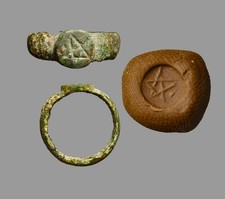
Cast in bronze, the deeply punched geometric matrix provided a distinct, repeatable pattern when pressed into sealing clay or wax.
Overview and Historical Context
Throughout the Roman Empire, everyday life was deeply intertwined with folk magic, protective talismans, and ritual amulets. Concentric ring-and-dot designs were among the most enduring solar and protective motifs in ancient metalworking, appearing on bone, bronze, and silver personal ornaments. Rings stamped with these protective "magic circles" provided citizens across the Mediterranean provinces with an accessible, wearable shield against bad fortune and unseen forces.
Authenticity Check
Displays a stunning, bright olive-gold and light bronze patina across the bezel and band face, highlighted by soft, natural cream-colored earthen caliche packed inside the ring-and-dot punches and inner band joins.
Authentic surface micro-pitting, copper-oxide patination, and organic ancient stress fractures along the thin wire hoop—including a clean ancient break/separation at the lower band—confirming over fifteen centuries of burial in Mediterranean soil.
Solid single-piece ancient casting showing authentic hand-punched ring-and-dot work and subtle organic asymmetry across the bezel matrix.
Comparable Examples
The British Museum, London: Accession No. 1917,0501.765 (Collection of Roman and Late Antique bronze rings featuring apotropaic ring-and-dot and geometric motifs).
The Ashmolean Museum, Oxford: Accession No. AN1941.838 (Roman and Late Period protective bronze amulets and punched signet rings).
The Metropolitan Museum of Art, New York: Accession No. 74.51.4272 (Holdings of ancient Eastern Roman bronze personal jewelry and protective charms).