When you click on links to various merchants on this site and make a purchase, this can result in this site earning a commission. Affiliate programs and affiliations include, but are not limited to, the eBay Partner Network.
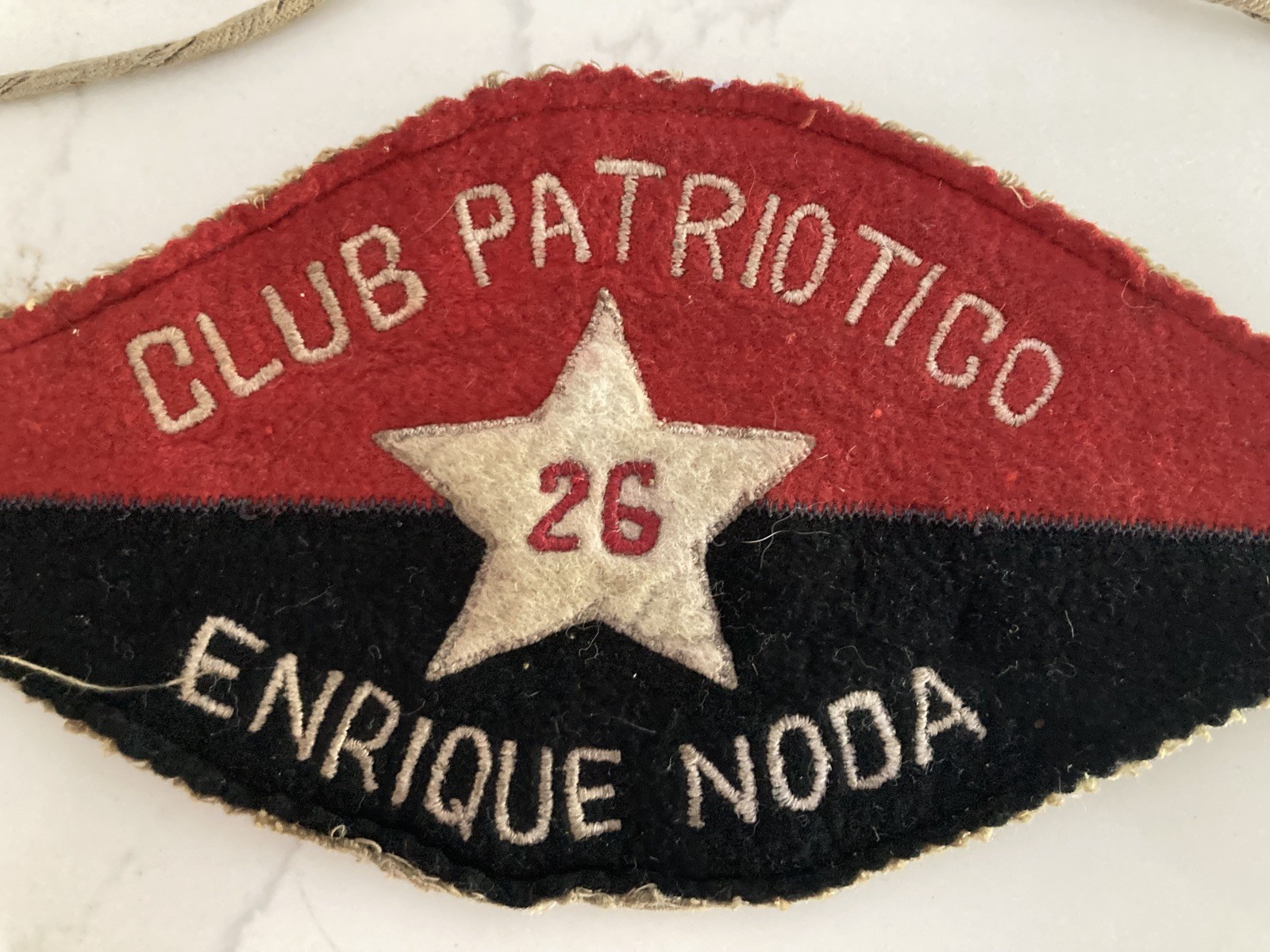
This is a rare revolutionary item of great patrimony . 1953 / 1958 arm bracelet of Enrique José Noda González (1926–1958) . Jose fought in the Sierra Maestra along side Fidel and Camilo . Important !
This is not a reproduction or replica .
It’s An original and One of only in existence and was most likely used by Jose in his early years in the M26 movement . Jose was a Cuban revolutionary who fought in the 26th of July Movement and the Rebel Army during the Cuban Revolution against Fulgencio Batista. ecured.cu
Key Facts:
• Birth and early life: Born on September 9, 1926, in Palmillas, Los Arabos, Matanzas province. He was the second of six children of Pedro Noda and Juana González. The family later moved to the Céspedes neighborhood in Manguito. He worked in agriculture with his father, in stores, and later as a sugar worker at the Central Porfuerza in Calimete. He moved to Havana multiple times for work and education. ecured.cu
• Education and early career: He studied at night and graduated as an accountant from the Escuela de Comercio. He worked as a bookkeeper while pursuing higher studies in Commercial Sciences at the University of Havana starting in 1952. There, he was elected as a course delegate to the Federación Estudiantil Universitaria (FEU), which connected him to revolutionary circles. ecured.cu
• Revolutionary involvement: He joined the Movimiento Revolucionario 26 de Julio (MR-26-7) early on. He led action groups in Havana (including training the Ferraz Pellicer brothers in bomb-making and Molotov cocktails), carried out sabotage, disarmed police agents, and handled fundraising and ideological preparation. He was imprisoned several times due to these activities. Though not directly involved in the 1953 Moncada Barracks attack, he was linked to its planning. ecured.cu
• Sierra Maestra period: After the Granma landing, he went to the Sierra Maestra in 1957 as part of reinforcements sent by Frank País. He fought in battles including Bueycito, Pino del Agua I, Malverde, and El Hombrito. He rose to the rank of first lieutenant (teniente primero) under Camilo Cienfuegos, known for his bravery. ecured.cu
• Death: He was killed on February 16, 1958, during the second Battle of Pino del Agua (one of the bloodier clashes in the Sierra Maestra). Leading a squad in Camilo Cienfuegos’ column, he died in the assault on enemy positions (reportedly shouting “¡Viva Cuba Libre!”). Other rebels like Gilberto Capote and Raimundo Liens also died in the action, and Camilo was wounded. ecured.cu
After the Revolution’s triumph in 1959, his remains were moved to Calimete, where he received honors including a bust and declaration as “Patriota Insigne” (Distinguished Patriot) of the municipality. Schools and institutions in Cuba (e.g., in Calimete and Jagüey Grande) bear his name in his memory. ecured.cu
Noda is remembered as a dedicated urban and rural fighter who exemplified commitment to the revolutionary cause. Information about him primarily comes from Cuban official sources like EcuRed and historical accounts of the Sierra Maestra campaigns.