When you click on links to various merchants on this site and make a purchase, this can result in this site earning a commission. Affiliate programs and affiliations include, but are not limited to, the eBay Partner Network.
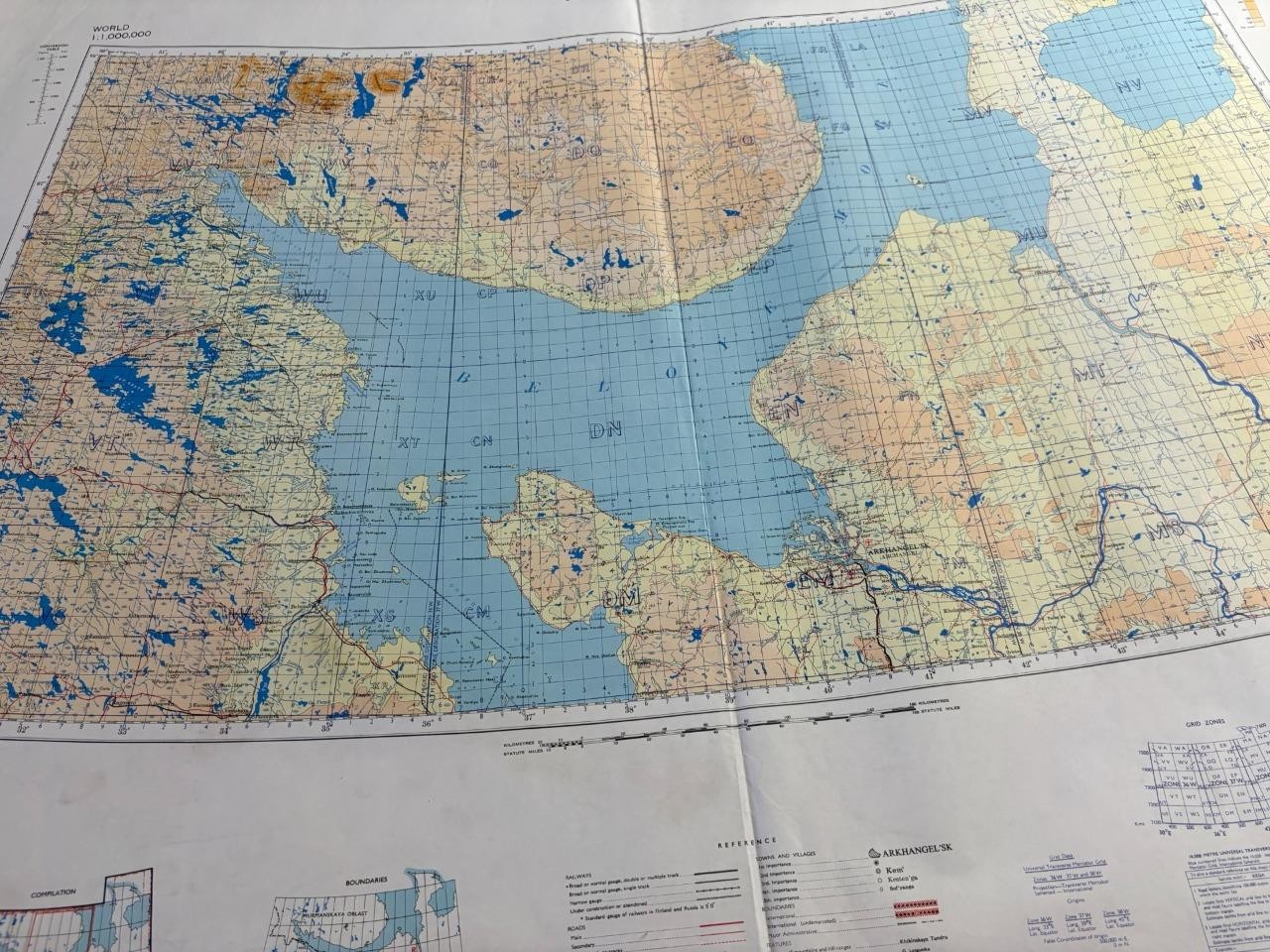
1956 Map Archangel Russia USSR Artic Convoys Destination during WW2 1/1000000see photos and read title its all thereThe Arctic convoys of World War II were 78 convoys that sailed from the United Kingdom, Iceland and North America, most to Arkhangelsk (Archangel) and Murmansk in the northern Soviet Union. The first convoy series was Convoy PQ 1 to Convoy PQ 18 (outbound) and Convoy QP 1 to Convoy QP 15 (inbound). The second series was Convoy JW 51 to Convoy JW 67 (outbound) and Convoy RA 51 to Convoy RA 67 (inbound). The convoys began in August 1941 and ended in May 1945, with suspensions during several months in 1942 and in the summers of 1943 and 1944.About 1,400 merchant ships sailed in the convoys, under the Anglo-Soviet Agreement and US Lend-Lease, mainly escorted by ships of the Royal Navy, with support from the Royal Canadian Navy and the US Navy. The convoys lost 85 merchant vessels and 16 British warships, including two cruisers. The Kriegsmarine lost the battleship Scharnhorst, three destroyers, and 30 U-boats; the Luftwaffe lost many aircraft. The convoys demonstrated the Western Allied commitment to the Soviet Union before the Operation Overlord, the invasion of France and tied up substantial German naval and air forces.[1]The Soviet leaders needed to replace the colossal losses of military equipment caused by Operation Barbarossa the German invasion, especially when Soviet war industries were being moved out of the war zone. The Soviets emphasised tank and aircraft deliveries; machine tools, steel and aluminium were also needed to replace indigenous resources lost in the invasion. The pressure on the civilian sector of the economy needed to be limited by food deliveries. The Soviets wanted to concentrate the resources that remained on items that the Soviet war economy that had the greatest comparative advantage over the German economy. Aluminium imports allowed aircraft production to a far greater extent than would have been possible using local sources and tank production was emphasised at the expense of lorries and food supplies were squeezed by reliance on what could be obtained from lend–lease. At the Moscow Conference, it was acknowledged that 1.5 million tons of shipping was needed to transport the supplies of the First Protocol and that Soviet sources could provide less than 10 per cent of the carrying capacity.[6]Propaganda poster advertising British aid to the Soviet war effortThe British and Americans accepted that the onus was on them to find most of the shipping, despite their commitments in other theatres. The Prime Minister, Winston Churchill, made a commitment to send a convoy to the Arctic ports of the USSR every ten days and to deliver 1,200 tanks a month from July 1942 to January 1943, followed by 2,000 tanks and another 3,600 aircraft more than already promised.[7] In November, the US president, Franklin D. Roosevelt, ordered Admiral Emory Land of the US Maritime Commission and then the head of the War Shipping Administration that deliveries to Russia should only be limited by \'insurmountable difficulties\'.[6] The first convoy was due at Murmansk around 12 October and the next convoy was to depart Iceland on 22 October. A motley of British, Allied and neutral shipping loaded with military stores and raw materials for the Soviet war effort would be assembled at Hvalfjörður in Iceland, convenient for ships from both sides of the Atlantic.[8]From Operation Dervish to Convoy PQ 11, the supplies to the USSR were mostly British, in British ships defended by the Royal Navy. A fighter force that could defend Murmansk was delivered that protected the Arctic ports and railways into the hinterland. British supplied aircraft and tanks reinforced the Russian defences of Leningrad and Moscow from December 1941. The tanks and aircraft did not save Moscow but were important in the Soviet counter-offensive. The Luftwaffe was by then reduced to 600 operational aircraft on the Eastern Front, to an extent a consequence of Luftflotte 2 being sent to the Mediterranean against the British. Tanks and aircraft supplied by the British helped the Soviet counter-offensive force back the Germans further than might have been possible. In January and February 1941, deliveries of tanks and aircraft allowed the Russians to have a margin of safety should the Germans attempt to counter-attack.[9]Post-war criticism of the quality of British supplies contradicted the praise offered to the Foreign Secretary, Anthony Eden, in Moscow in December, of the performance of Hurricane fighters and Valentine tanks; Matilda tanks were admittedly inferior in snow but were expected to operate better in the summer. Deliveries helped to improve the long-term potential of the Soviet war economy. The 17,000 long tons (17,000 t) of aluminium sent from Britain was the equivalent to the capacity lost in the Soviet Union in the six months from October 1941 and 10,000 long tons (10,000 t) each of copper and rubber were generally useful to the Soviet economy, especially after rubber from Malaya was cut off in the Malayan campaign (8 December 1941 – 15 February 1942). Radar and Asdic apparatuses improved Russian anti-aircraft defences and the naval protection of the Arctic ports. In the first winter of the war in Russia the British helped to tide the USSR over, at some cost to British grand strategy; the 700 fighters and about 500 tanks sent to Russia in 1941 could have made a substantial difference to British fortunes in the Middle East and Far East. The Germans laid plans to stop the Arctic convoys in 1942.[10] 1956 Map Archangel Russia USSR Artic Convoys Destination during WW2 1/1000000 1956 Map Archangel Russia USSR Artic Convoys Destination during WW2 1/1000000
Click image to enlarge
Description 1956 Map Archangel Russia USSR Artic Convoys Destination during WW2 1/1000000
see photos and read title its all there
The Arctic convoys of World War II were 78 convoys that sailed from the United Kingdom, Iceland and North America, most to Arkhangelsk (Archangel) and Murmansk in the northern Soviet Union. The first convoy series was Convoy PQ 1 to Convoy PQ 18 (outbound) and Convoy QP 1 to Convoy QP 15 (inbound). The second series was Convoy JW 51 to Convoy JW 67 (outbound) and Convoy RA 51 to Convoy RA 67 (inbound). The convoys began in August 1941 and ended in May 1945, with suspensions during several months in 1942 and in the summers of 1943 and 1944.
About 1,400 merchant ships sailed in the convoys, under the Anglo-Soviet Agreement and US Lend-Lease, mainly escorted by ships of the Royal Navy, with support from the Royal Canadian Navy and the US Navy. The convoys lost 85 merchant vessels and 16 British warships, including two cruisers. The Kriegsmarine lost the battleship Scharnhorst, three destroyers, and 30 U-boats; the Luftwaffe lost many aircraft. The convoys demonstrated the Western Allied commitment to the Soviet Union before the Operation Overlord, the invasion of France and tied up substantial German naval and air forces.[1]
The Soviet leaders needed to replace the colossal losses of military equipment caused by Operation Barbarossa the German invasion, especially when Soviet war industries were being moved out of the war zone. The Soviets emphasised tank and aircraft deliveries; machine tools, steel and aluminium were also needed to replace indigenous resources lost in the invasion. The pressure on the civilian sector of the economy needed to be limited by food deliveries. The Soviets wanted to concentrate the resources that remained on items that the Soviet war economy that had the greatest comparative advantage over the German economy. Aluminium imports allowed aircraft production to a far greater extent than would have been possible using local sources and tank production was emphasised at the expense of lorries and food supplies were squeezed by reliance on what could be obtained from lend–lease. At the Moscow Conference, it was acknowledged that 1.5 million tons of shipping was needed to transport the supplies of the First Protocol and that Soviet sources could provide less than 10 per cent of the carrying capacity.[6]
Propaganda poster advertising British aid to the Soviet war effort
The British and Americans accepted that the onus was on them to find most of the shipping, despite their commitments in other theatres. The Prime Minister, Winston Churchill, made a commitment to send a convoy to the Arctic ports of the USSR every ten days and to deliver 1,200 tanks a month from July 1942 to January 1943, followed by 2,000 tanks and another 3,600 aircraft more than already promised.[7] In November, the US president, Franklin D. Roosevelt, ordered Admiral Emory Land of the US Maritime Commission and then the head of the War Shipping Administration that deliveries to Russia should only be limited by \'insurmountable difficulties\'.[6] The first convoy was due at Murmansk around 12 October and the next convoy was to depart Iceland on 22 October. A motley of British, Allied and neutral shipping loaded with military stores and raw materials for the Soviet war effort would be assembled at Hvalfjörður in Iceland, convenient for ships from both sides of the Atlantic.[8]
From Operation Dervish to Convoy PQ 11, the supplies to the USSR were mostly British, in British ships defended by the Royal Navy. A fighter force that could defend Murmansk was delivered that protected the Arctic ports and railways into the hinterland. British supplied aircraft and tanks reinforced the Russian defences of Leningrad and Moscow from December 1941. The tanks and aircraft did not save Moscow but were important in the Soviet counter-offensive. The Luftwaffe was by then reduced to 600 operational aircraft on the Eastern Front, to an extent a consequence of Luftflotte 2 being sent to the Mediterranean against the British. Tanks and aircraft supplied by the British helped the Soviet counter-offensive force back the Germans further than might have been possible. In January and February 1941, deliveries of tanks and aircraft allowed the Russians to have a margin of safety should the Germans attempt to counter-attack.[9]
Post-war criticism of the quality of British supplies contradicted the praise offered to the Foreign Secretary, Anthony Eden, in Moscow in December, of the performance of Hurricane fighters and Valentine tanks; Matilda tanks were admittedly inferior in snow but were expected to operate better in the summer. Deliveries helped to improve the long-term potential of the Soviet war economy. The 17,000 long tons (17,000 t) of aluminium sent from Britain was the equivalent to the capacity lost in the Soviet Union in the six months from October 1941 and 10,000 long tons (10,000 t) each of copper and rubber were generally useful to the Soviet economy, especially after rubber from Malaya was cut off in the Malayan campaign (8 December 1941 – 15 February 1942). Radar and Asdic apparatuses improved Russian anti-aircraft defences and the naval protection of the Arctic ports. In the first winter of the war in Russia the British helped to tide the USSR over, at some cost to British grand strategy; the 700 fighters and about 500 tanks sent to Russia in 1941 could have made a substantial difference to British fortunes in the Middle East and Far East. The Germans laid plans to stop the Arctic convoys in 1942.[10] Payment Mangaed via Shipping Royal Mail Tracked 48hr Terms of Sale Private seller About Us Private seller Contact Us via Showcase your products with Auctiva\'s image tools and templatesShowcase your listings with 300+ unique Auctiva templates
Powerful Tools for Online Sellers
Get your own free counter at Auctiva
Try Auctiva free for 30 days, no credit card required