When you click on links to various merchants on this site and make a purchase, this can result in this site earning a commission. Affiliate programs and affiliations include, but are not limited to, the eBay Partner Network.
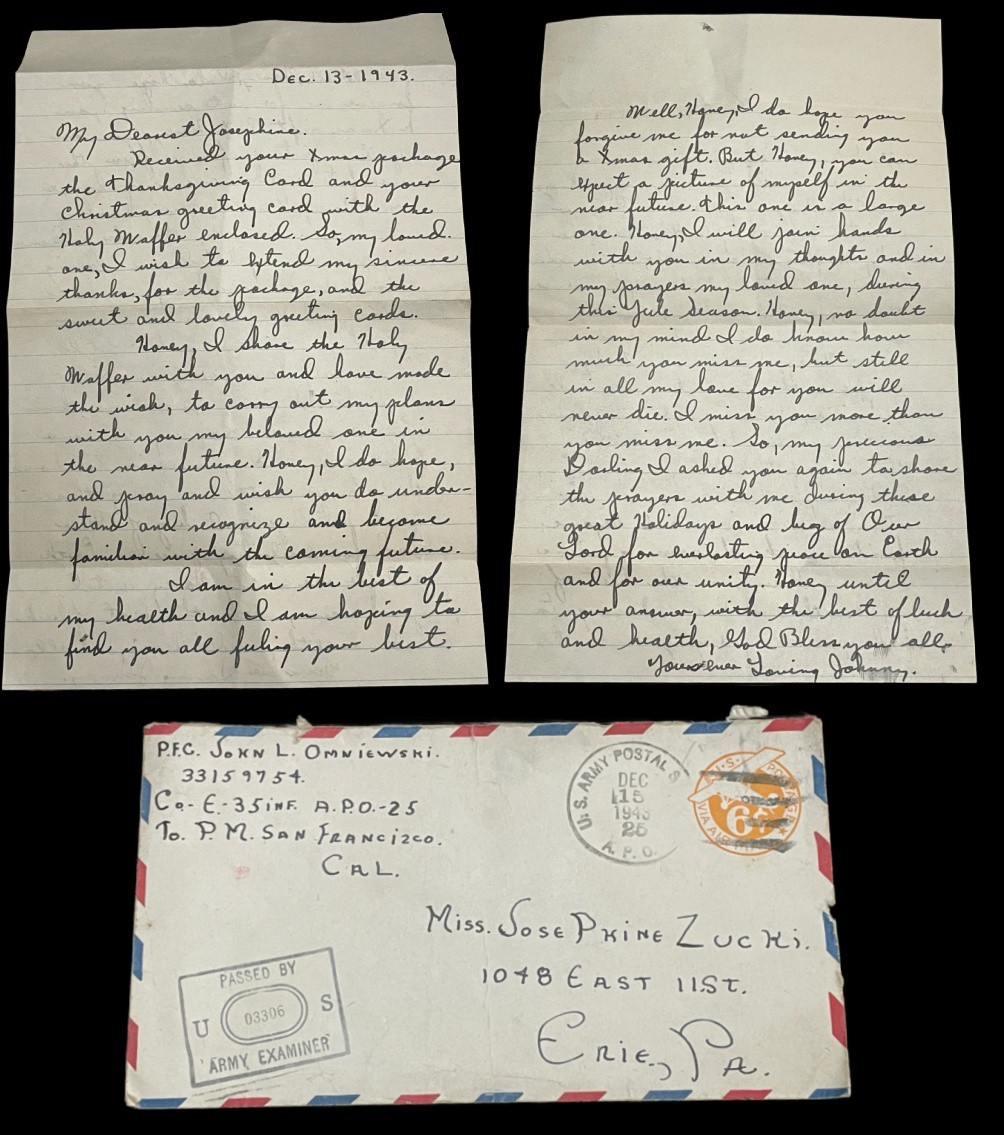
Original WWII love letter written December 13, 1943 by PFC John L. Omniewski, Company E, 35th Infantry, APO 25, to his sweetheart Miss Josephine Zucchi of Erie, Pennsylvania.
The envelope was processed through U.S. Army Postal Service APO 25 on December 15, 1943 and bears an Army Examiner censorship marking. Original 6¢ airmail postal stationery envelope is included.
A particularly heartfelt Christmas-season letter in which Johnny thanks Josephine for her Thanksgiving card, Christmas greeting and Holy Wafer. He writes of sharing the Holy Wafer with her in spirit and hoping to someday carry out his plans with his “beloved one.”
Johnny tells Josephine that he is in good health and apologizes for not sending her a Christmas gift. Interestingly, he promises that she can expect “a picture of myself in the near future,” adding that it will be a large one.
The emotional heart of the letter comes as he writes:
“I miss you more than you miss me.”
He asks his “precious Darling” to share prayers with him during the holiday season and writes of praying for everlasting peace on Earth and “for our unity.”
Signed:
“Your Dear Loving Johnny”
A wonderful surviving piece of WWII correspondence combining military postal history, Christmas on the wartime home front, faith, separation and the very personal hopes of a young couple during the war.
The envelope is especially useful historically because Johnny identifies the recipient by her full name, Miss Josephine Zucchi, helping preserve the identity of the woman behind the correspondence.
Letter and original envelope show expected age, folds, handling and wear from wartime mailing and storage. Please review all photographs carefully for exact condition.
This letter is part of a larger surviving WWII correspondence between Johnny and his sweetheart Josephine. Later material in the correspondence indicates that Johnny did not survive the war, adding historical context to the letters he sent home about their relationship, daily life and hopes for the future.