

|
Site Categories |
|
Featured Items |

Poodle, Spaghetti Trim, Ucagco


|
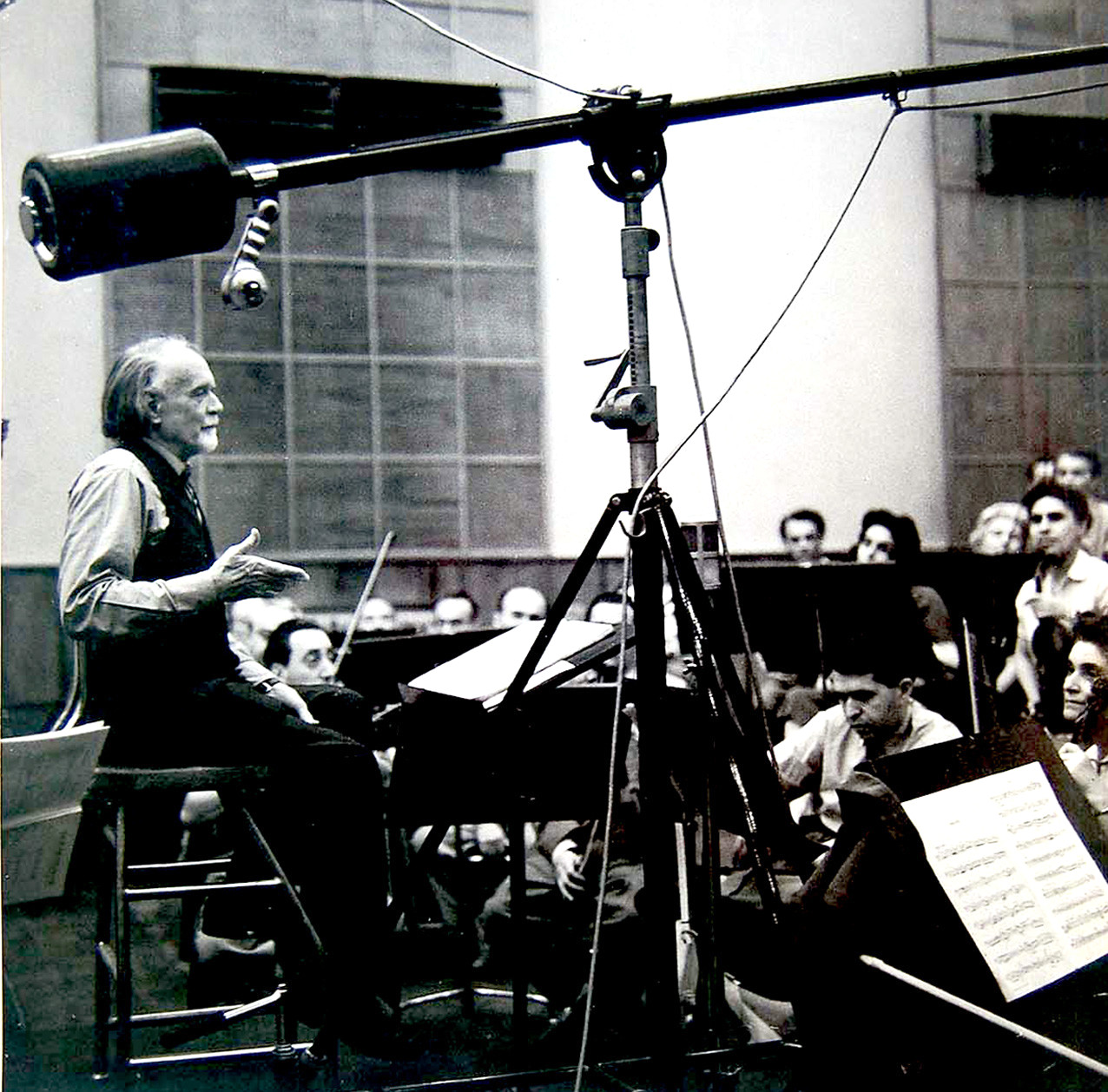
1940 Original GIANT ACTION PHOTO Conductor COMPOSER ZOLTAN KODALY Hungary MUSIC For Sale

When you click on links to various merchants on this site and make a purchase, this can result in this site earning a commission. Affiliate programs and affiliations include, but are not limited to, the eBay Partner Network.

1940 Original GIANT ACTION PHOTO Conductor COMPOSER ZOLTAN KODALY Hungary MUSIC:
$75.00
DESCRIPTION : Up for sale is an ORIGINAL GENUINE GIANT( Around 12\" x 15.5\" )REAL ACTION PHOTO of the beloved acclaimed musician , The Hungarian composer ZOLYAN KODALY . The ORIGINAL PHOTO depicts around 60years old KODALY in action , Conducting a small orchestra during a concert , Very propably a recording in ca 1940\'s - 1950\'s. The photo is an original silver gelatine photo of unusual LARGE size ( Around 12\" x 15.5\" ) ,Made by an Hungarian photographer in the 1950\'s , Definitely not astandard press or publicity photo . The photographer Hungarian stamp on verso. The PHOTO is an original ( Silver Gelatine ) photo. A hand written description in red pen on verso. .The size of the photo is around 12\" x 15.5\" . Very good condition ( Pls look at scan for accurate AS ISimages ). Authenticity guaranteed. Will be sent inside a protectiverigidpackaging .PAYMENTS : Payment method accepted : Paypal.SHIPPMENT :SHIPP worldwide viaregistered airmail is $ 29 .Will be sent inside a protectivepackaging. Handling around5-10 days afterpayment. Zoltán Kodály (Hungarian: Kodály Zoltán 16December 1882 – 6 March 1967) was a Hungarian composer, philosopher.He is best known internationally as the creator of the Kodály Method.Born in Kecskemét,Kodály learned to play the violin as a child.In 1905 he visitedremote villages to collect songs, recording them on phonograph cylinders. In1906 he wrote the thesis on Hungarian folk song (\"Strophic Construction inHungarian Folksong\"). Around this time Kodály met fellow composer BélaBartók, whom he took under his wing and introduced to some of themethods involved in folk song collecting. The two became lifelong friends andchampions of each other\'s music. All these works show a great originality ofform and content, a very interesting blend of highly sophisticated mastery inthe Western-European style of music, including classical, late-romantic,impressionistic and modernist tradition and at the other hand profoundknowledge and respect for the folk music in Hungary and the Hungarian-inhabitedareas of Slovakia and Romania. Partly because of the Great War and subsequentmajor geopolitical changes in the region, partly because of a naturally ratherdiffident temperament in youth, Kodály had no major public success until 1923.This was the year when one of his best-known pieces, Psalmus Hungaricus, wasgiven its first performance at a concert to celebrate the fiftieth anniversaryof the union of Buda and Pest (Bartók\'s DanceSuite premiered on the same occasion.)Throughout his adult life,Kodály was very interested in the problems many types of music education, andhe wrote a large amount of material on teaching methods as well as composingplenty of music intended for children\'s use. Beginning in 1935, along with hiscolleague Jenö Ádám (14 years his junior), he embarked on a long-termproject to reform music teaching in Hungary\'s lower and middle schools. Hiswork resulted in the publication of several highly influential books.TheHungarian music education program that developed in the 1940s became the basisfor what is called the \"Kodály Method\". While Kodalyhimself did not write a comprehensive method, he did establish a set ofprinciples to follow in music education, and these principles were widely takenup by pedagogues (above all in Hungary, but also in many other countries) afterWorld War II. See also: Kodály Hand Signs. His notablestudents include Anne Lauber and John Verrall. In the motion picture CloseEncounters of the Third Kind, a visual learning aid distributed tomembers of a conference of UFOlogists was named \"Zoltan Kodaly\" andreferenced musical notes as hand signals.Kodály\'s first wife was Emma Gruber(nee Schlesinger, later Sándor), the dedicatee of Ernő Dohnányi\'s Waltz forpiano four-hands, Op. 3, and Variations and Fugue on a theme by E.G. ZoltánKodály, Op. 4 (1897).In November 1958, after 48 years of the most harmonious marriage Kodály\'s firstwife Emma passed away. In December 1959, Kodály married Sarolta Péczely, his 19 yearold student at the Franz Liszt Academy of Music with whom he lived happilyuntil his death in 1967 at the age of 84.Zoltán Kodály, the Hungarian composer,ethnomusicologist and educationalist, pioneered the reintegration of folkmaterial into 20th century music* Studied Hungarian and German atBudapest University and composition and teaching at the Academy of Music*In 1905 started field trips collecting folksongs with Bartók, a lifetime friend* In 1907 travelled to Parisand was greatly influenced by Debussy\'s music* Appointed professor atAcademy of Music (1907-40)* First public performances in 1910 at concertsignalling birth of new Hungarian music* After fall of Hungarian republicin 1919 stripped of teaching positions for two years and musicallyisolated* International career rekindled in 1923 with success of PsalmusHungaricus* Music championed by conductors Toscanini, Mengelberg,Ansermet and Furtwängler* From 1925 further developed educationalactivities, revolutionising teaching of singing and sight reading* In1930s composed orchestral showpieces including Peacock Variation andConcerto for Orchestra* Many choralworks, combining influence of Magyar folk singing, Gregorian chant, andpolyphonic styles of Palestrina and Bach 1930
|
|
Related Items: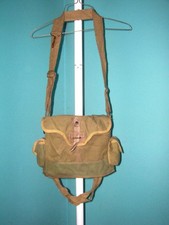
WW11 FRENCH GAS MASK SHOULDER BAG DATED 1940 ORIGINAL $44.95
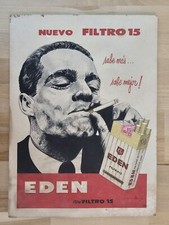
EDEN BRAND CIGAR NEW 15 ART ARTIST ORIGINAL DESIGN POSTER XXL 1940s VINTAGE $149.99

WWII Era 1940s Military Goggles Green Lens Fur Lined Aviator Ski Mountain $75.00
|
|
|
Shopping Cart  |

|
Recently Viewed |
|
Latest Items |
|
Facebook |
Secure Websites

|
