When you click on links to various merchants on this site and make a purchase, this can result in this site earning a commission. Affiliate programs and affiliations include, but are not limited to, the eBay Partner Network.
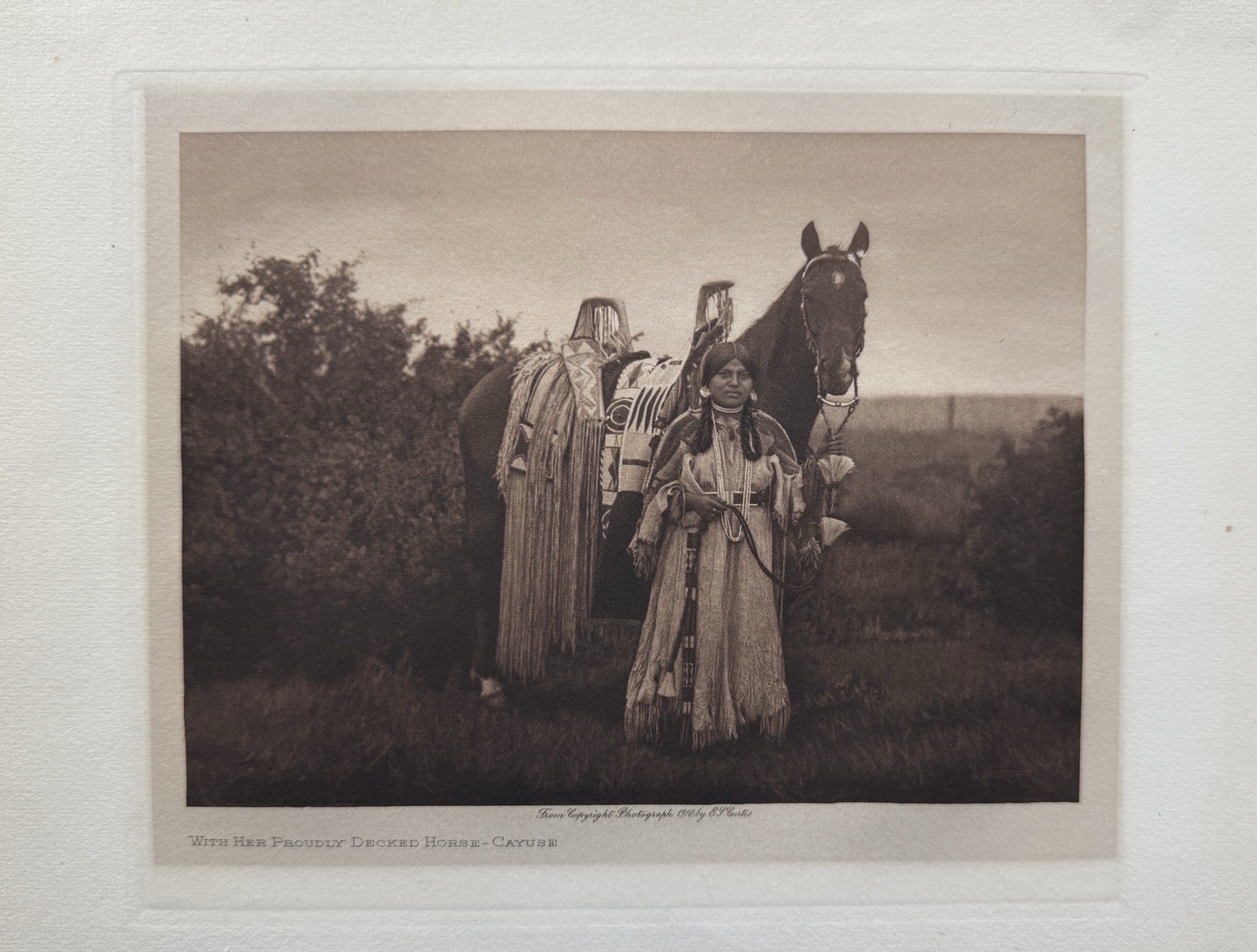
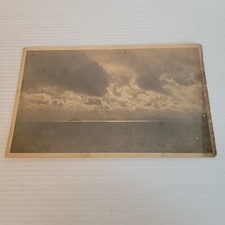
This is an original photogravure given to me from a family friend over 30 years ago. I was given 2 of Curtis’s works and both are listed here. It’s available on its own, in the custom mat, or matted and framed which is how it was given to me.
* Curtis used two standard sizes, 5 x 7″ image size (or reverse), and approximately 12 x 16″ image size (or reverse). He favored three hand-made papers: Japanese Vellum, Holland “Van Gelder,” and Japanese “Tissue,” also known as India Proof Paper.
Edward Sheriff Curtis was born in a rural community outside of Whitewater, Wisconsin, on February 16, 1868. His career in photography began when he dropped out of the sixth grade and built his own camera. By 1885, he was an apprentice photographer in St. Paul, Minnesota. The Curtis family moved to Seattle, Washington, soon thereafter where Edward Curtis’s career in photography took off after meeting and photographing Princess Angeline, which became his first Native American portrait. Over the next 15 years, Curtis’s relationship with an expert of Native American Studies, George Bird Grinnell, enabled him to be the Official Photographer for the Harriman Alaska Expedition. He accompanied Grinnell on an expedition through Montana to photograph the Blackfoot Confederacy. The photography from these expeditions caught the eye of J.P. Morgan, who offered Curtis $75,000 to create a twenty-volume work, including 1,500 pictures, on Native Americans. His work, The North American Indian, and a feature length, ethnographic, silent film, In the Land of the Head Hunters, which featured members of the Kwakiutl [Kwakwaka’wakw] people of the Pacific Northwest, were not enough to financially support himself or his family. This economic hardship resulted in Curtis selling the rights to The North American Indian to J.P. Morgan Jr. in 1928, before publishing the final volume in 1930.